New publications - July 2026
Overview
Two manuscripts were published this month - read below for more information!
From blue to pink: resazurin as a high-throughput proxy for metabolic rate in oysters
Journal
Published in PeerJ on 20 July 2026
Abstract
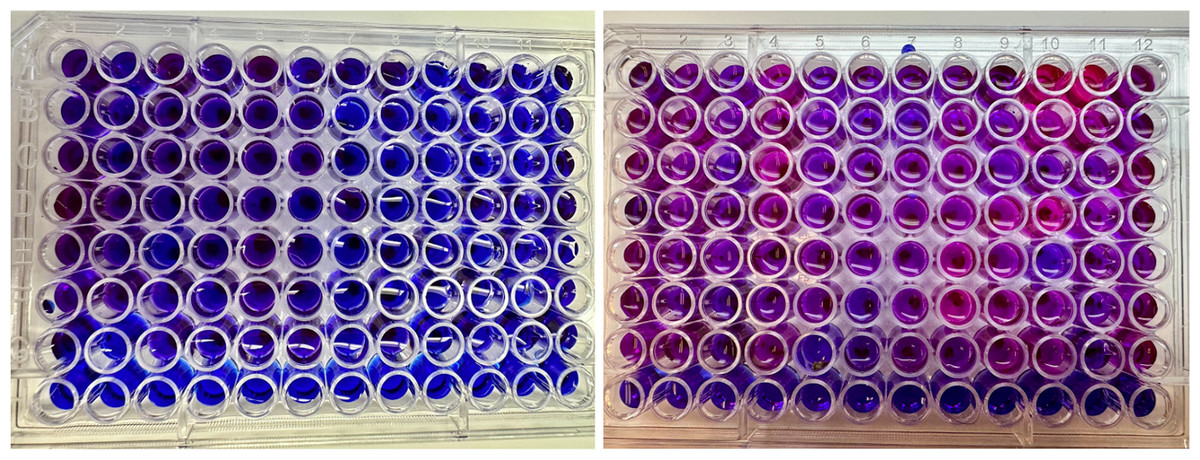
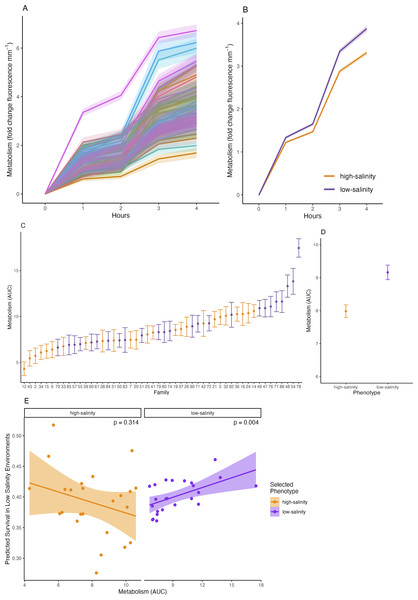
Metabolic rate assays are essential for assessing organismal stress and resilience, yet their use in aquaculture remains limited. We evaluate a whole-organism, resazurin-based metabolic assay for oysters (Crassostrea gigas and C. virginica) across multiple experimental contexts. Resazurin fluorescence was strongly correlated with oxygen consumption, validating its use as a metabolic proxy. Thermal performance assays revealed expected temperature-dependent metabolic patterns, including clear optima and tipping points where stimulation shifted to metabolic depression. Acute thermal stress experiments showed that individuals exhibiting greater metabolic depression were more likely to survive, indicating metabolism as a predictor of mortality. We also detected genetic variation in metabolic responses, with significant family-level differences. Finally, metabolic rates of 50 selectively bred C. virginica families were significantly correlated with predicted performance. Together, these results establish resazurin as a reliable, scalable assay for whole-organism metabolism, offering a practical tool to support stock selection, hatchery management, and climate-resilient aquaculture.
Seasonal Physiological Strategies Reveal Contrasting Host–Symbiont Dynamics Among Dominant Indo-Pacific Reef-Building Corals

Journal
Published in Ecology and Evolution on 20 July 2026
Abstract
As coral reefs face declines driven by thermal stress and the breakdown of coral symbiosis (i.e., coral bleaching), restoration efforts rely on coral health and resilience rankings. However, seasonal plasticity in symbiosis and metabolism and the presence of cryptic species complicates data interpretation. Quantifying seasonal plasticity in coral physiology and incorporating genetic identification are essential for interpreting and drawing conclusions from trait-based and fitness-based analyses. To test the effect of seasonal and site variation on physiology, we sampled three ecologically dominant genera, Acropora, Pocillopora, and Porites across three lagoon sites (n=15 tagged colonies genus−1 site−1) on the north shore of Moʻorea, French Polynesia in January, March, September, and December of 2020. We identified coral host and intracellular Symbiodiniaceae to the highest taxonomic resolution possible and quantified 13 physiological variables. Genetic analyses identified A. pulchra and cryptic lineages in Pocillopora (P. meandrina, P. tuahiniensis) and Porites (P. evermanni, P. lobata/lutea). Acropora pulchra hosted Durusdinium trenchii and Symbiodinium microadriaticum. Symbiont communities differed between cryptic congeners, with P. meandrina hosting Cladocopium latusorum and P. tuahiniensis hosting Cladocopium pacificum, whereas P. evermanni and P. lobata/lutea both hosted Cladocopium (C15), but each with unique C15 profiles. Acropora and Pocillopora displayed seasonal cycles of symbiont density and productivity (“boom and bust”) in association with light and temperature, a pattern that may contribute to the greater environmental sensitivity previously reported in these taxa. In contrast, Porites exhibited greater symbiont stability, with temperature—rather than light—showing stronger associations with host physiology. Increased host biomass under cooler conditions, which may provide greater energy reserves, could represent one mechanism contributing to the comparatively greater stress tolerance observed in massive Porites. Collectively, our findings highlight the importance of integrating baseline physiological measurements with host and symbiont genetics when interpreting coral responses across seasons.support stock selection, hatchery management, and climate-resilient aquaculture.
